
Original power supply
Match the device voltage, current, connector, and polarity by using the supplied adapter unless the product maker documents another option.
Installation guide
The outlet, original adapter, cable path, ventilation, surge protection, and service access should be decided before the display is fixed to the wall.
Quick answer
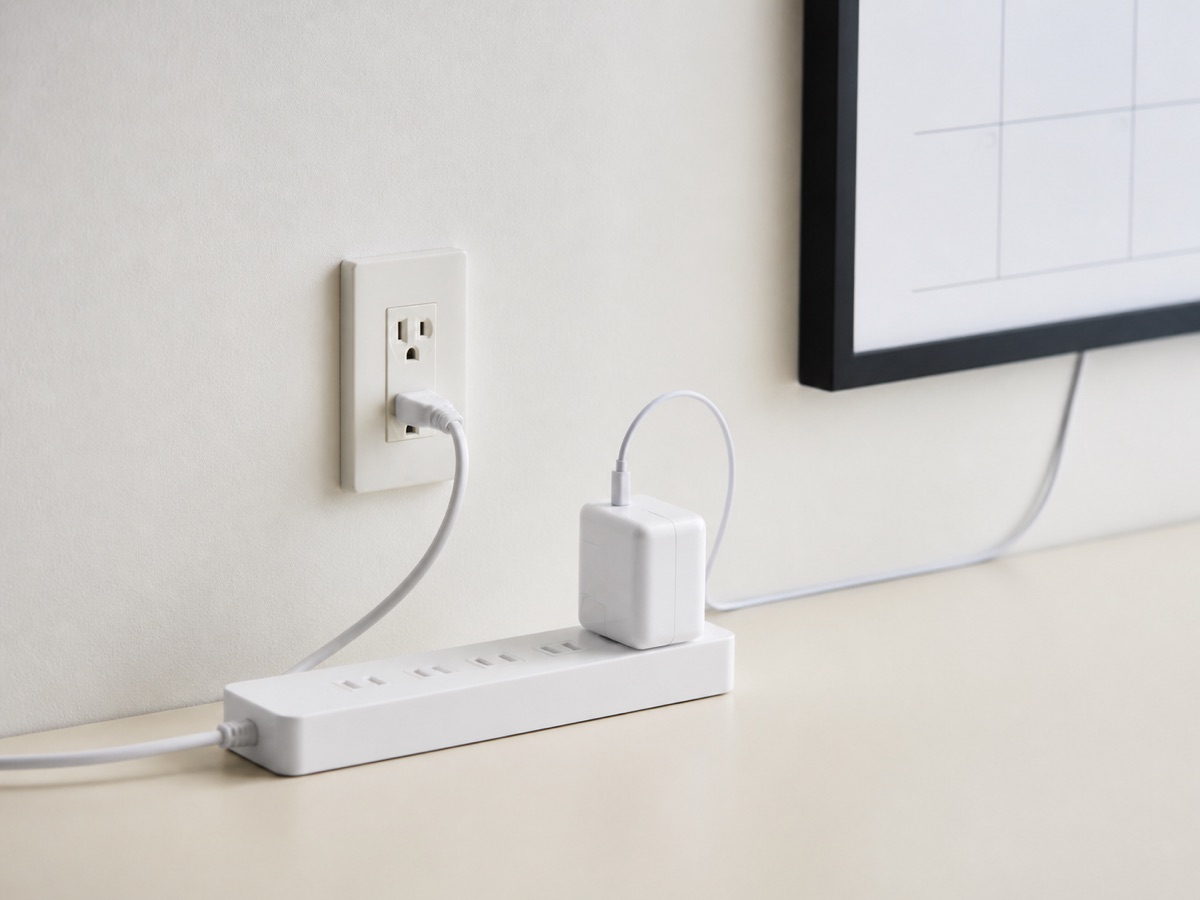
Use the display maker power adapter unless the manufacturer explicitly approves an alternative. Keep the adapter ventilated and accessible, avoid overloading or daisy-chaining power strips, protect cables from pinching, and involve a qualified electrician when the outlet or permanent wiring needs to move.
Decision framework
Match the device voltage, current, connector, and polarity by using the supplied adapter unless the product maker documents another option.
Check whether the adapter blocks adjacent outlets, bends the cable sharply, or sits where furniture and the display can trap heat.
Add the connected loads, stay within the strip rating, use independent safety certification, and never plug one relocatable power tap into another.
The family should be able to disconnect, reset, replace, or inspect the adapter without removing permanent wall construction.
Installation sequence
The order is intentional: the accessory should follow the device, room, and power plan.
Record the supplied adapter, connector direction, cable length, and outlet position.
Keep plugs and adapters dry, ventilated, visible enough to inspect, and clear of pinch points.
Compare the combined equipment load against every strip, cord, and outlet rating in the path.
Use surface management only within product and local electrical rules; permanent concealed wiring belongs to a qualified electrician.
Look for heat, loose connections, damaged insulation, cable strain, or blocked ventilation during early use.
Tracked products
These are candidates, not universal recommendations. Open the fit profile where available and verify the live listing before checkout.
Catalog candidate TESSAN
Wall-mountable power-strip option for display installations that need a low-profile plug and nearby protected outlets.
ASIN B08DKP7GLT · source checked 2026-08-10
Stop signs
Related research
Sources
Common questions
Only when the device maker explicitly approves the electrical specifications and connector. The safest default is the original supplied adapter.
Only if its instructions allow that mounting position and it remains ventilated, dry, within load limits, and accessible for inspection and disconnection.
No. CPSC safety notices and product labels warn against plugging relocatable power taps into another power tap or extension cord.
Use a qualified electrician when an outlet must move, permanent wiring is needed, the circuit condition is uncertain, or local rules require professional work.